While perusing the internet for gigs to attend in Liverpool, I came across an advertisement for ‘Bwncath’ – a Welsh-speaking folk-rock trio from Caernarfon. Intrigued, I decided to go ahead and purchase a ticket.
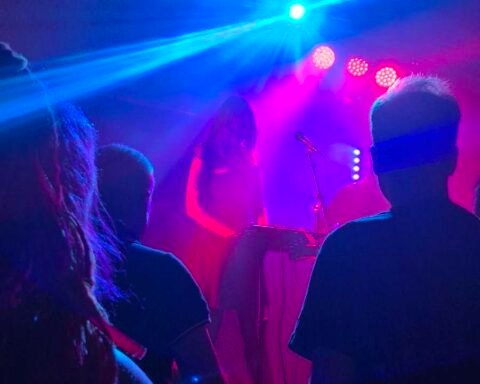
I arrived at District for around 8pm, a venue I had since learned to be reliable and distinct but slightly elusively placed. As soon as my friend and I set foot in the building, it felt as if we’d time travelled to the early 2010s. We were greeted with a sound which was reminiscent of that era’s distinctive indie folk: I instantly thought of Mumford & Sons and The Lumineers. ‘Lonely Mountain’, a contemporary folk duo from Snowdonia, turned out to be the second support act of the night. I scouted a good spot in the crowd and we continued to enjoy the rest of their set. For a two member group, they sported some impressive musical talent, with lead guitarist Finlay interchanging between a banjo, bass drum and even vocal contributions to some songs throughout the set. Lead singer Archie had that perfectly raspy baritone voice that’s recognisable in modern folk, a current example being Noah Kahan.
The two even slipped in a few hollers similar to those found in traditional celtic folk songs, which I’d imagine would feel even more liberating to shout atop a Snowdonian mountain. During a section of their set, they announced that a man from Shropshire had travelled all the way to North Wales to watch them perform, and had requested for them to play their 2024 single, ‘Life Jacket’. They proceeded to play the song in dedication to him, a more stripped back and emotional number than previous songs in their setlist.
Once the set came to a close, there was a brief interlude before the next act of the night, ‘Adelphi’, commenced. During this break, I couldn’t help but pick up a large volume of fluent Welsh speakers within my vicinity, which came as a pleasant surprise.
‘Adelphi’ brought a very different energy to the stage compared to their preceders, opening their set with a burst of youthful energy. This came as an unexpected surprise to the audience, who took a while to ease into it; while the band urged the audience to move closer to the stage, only a handful of people complied. Their next song was a cover of a familiar favourite: ‘The Bartender and the Thief’ by Stereophonics. The crowd revived itself a little, with a group even jumping energetically near the stage.
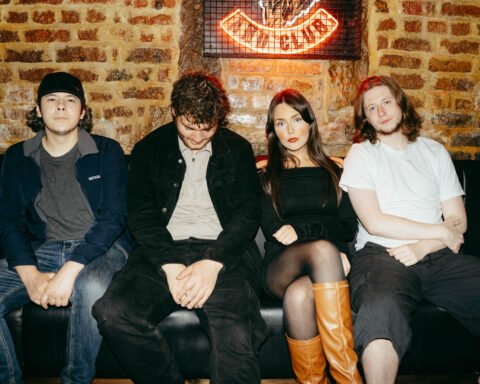
What I found striking about this group was their charmingly incohesive visual aesthetics: every member of the group looked like they could belong to a different era of music altogether. The bass player looked like a young Welsh George Harrison; the drummer was sporting a bowl cut and sunglasses, and the other two members looked straight out of the nineties. Regardless, for an up and coming band with just a few singles out on streaming platforms, they did well and played cohesively. Their set consisted of a well-constructed mix of catchy indie-rock singles and well-known covers that people could easily sing along to.
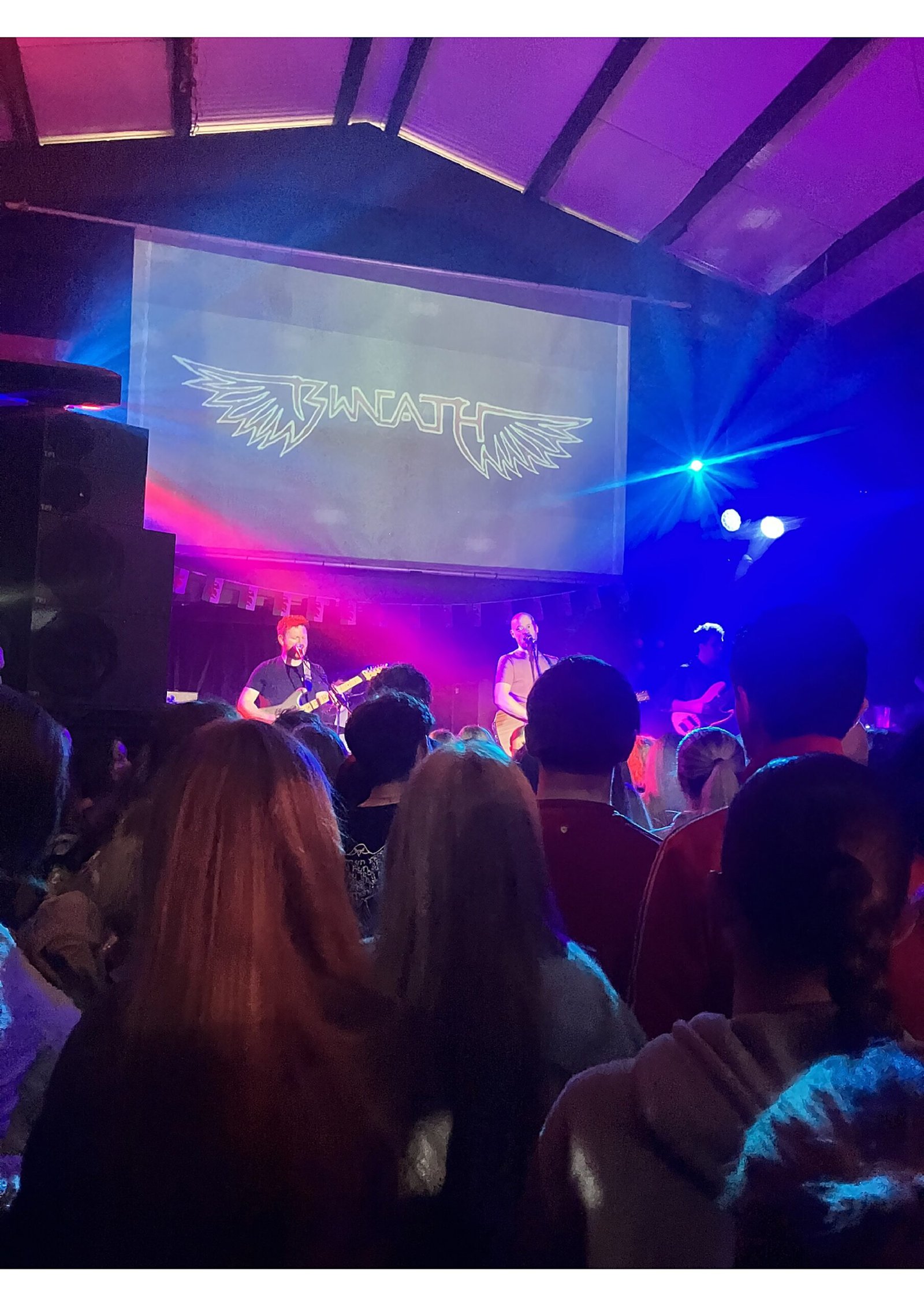
In the break, I tried my hand at some (very rusty) Welsh conversation, grabbed a drink and returned just before ‘Bwncath’ began their set. By this time, the venue was packed to its maximum capacity and there was an excited buzz in the air.
While I had watched some online performances of the band from last year’s Eisteddfod, I had no idea of the amount of cultural relevance they held for Wales until I witnessed the crowd’s reaction. With the concert being held in Liverpool, I hadn’t expected so much patriotism to emanate from District’s mere 300 person capacity: I was clearly proven wrong. People shouted the lyrics to each song with such passion, hands waving in the air or wrapped around each other. Some people swayed along (me included), some danced, some just nodded their heads, but what really stuck with me was the amount of pride and community that was contained in such a small space.
A standout song was ‘Barti Ddu’, which cultivated a very visceral reaction from the crowd. The song celebrates the life of Bartholemew Roberts, a Welsh pirate from the 18th century. Around 80% of the audience seemed to know the words to every song, which was something I had not anticipated but came to appreciate as a clear sign of a very devoted fanbase. This was enhanced by lead singer Elidyr Glyn and guitarist Robin Llwyd’s engagement with the crowd, who smiled knowingly at especially passionate crowd members and sang sections of songs especially for them. They moved in a synchronised sway, which I couldn’t differentiate from being rehearsed or simply a consequence of performing together for so long.
The set came to a supposed close with the group’s most well-known single, which won ‘Song For Wales’ in 2019: ‘Fel Hyn Da Ni Fod’. It’s a song I return to frequently, its beautifully crafted lyrics tied together with delicately strummed acoustic guitar which builds in its emotional chorus:
O fel ‘ma ‘da ni a fel hyn ‘da ni fod,
Does ‘na neb arall fel ni yn bod.
(This is how we are and this is how we should be,
There is no one else like us.)
It serves as a reminder that the Welsh language and culture can and will always exist if we carry it with pride and celebrate it frequently: and, from the audience’s reaction, it’s clear that ‘Bwncath’ still remains as an important facilitator for the connection between language and community.
As if it couldn’t get patriotic enough, the band encored with a cover of Dafydd Iwan’s ‘Yma O Hyd’, shortly followed by the Welsh national anthem, ‘Hen Wlad Fy Nhadau’. The crowd then continued this energy by serenading the band with another Welsh favourite, ‘Calon Lan’, and chanted their way out of the venue.
The live event served as a sentimental and celebratory love letter to Wales and showed the severity with which Welsh people are willing to show their pride for their country. I came out of District feeling enlightened and restored with a new sense of home: somewhere to be immensely proud of.
Review by: Amelie Griffiths
Image credit: Amelie Griffiths